
Loading HoneyMesh...
Loading HoneyMesh...
Review the product architecture, operator controls, sharing boundary, release scope, and the measured federation test. Request current contractual and data-handling materials before production approval.
Signed Firewall Beta, Node Pro, and Infrastructure Core Beta archives are available through plan-matched paid access. Use the installation and recovery guides inside the exact archive you download. The rc3 package lifecycle records and rc2 three-node federation proof remain historical evidence; that federation test was not rerun on rc3.
Read the measured proof and its limitsHoneyMesh is designed to protect infrastructure without exposing its internal defensive logic in public-facing materials. Public documentation focuses on product outcomes, operator trust boundaries, and the intended data-sharing model.
That means this site intentionally avoids publishing exact detection criteria, trap behavior, internal thresholds, and other low-level mechanics that could help an attacker adapt around the platform.
Core Beta
Core Beta is available as a signed, plan-matched archive for paid Infrastructure Pro hosts on noncritical Ubuntu 24.04 AMD64 systems; mesh sharing is excluded.
HoneyMesh Pro
Pro's planned coordinated defense adds trusted mesh participation, sharing controls, and shared attack intelligence across approved nodes. Distributed Pro enforcement remains outside the current paid beta pilot.
Exchange Discovery
Exchange discovery and opt-in trust controls are being qualified in private pilots. They are not part of the current customer download or free Builder Lab.
Core Beta customer delivery is available to paid Infrastructure Pro subscribers. Distributed Pro capabilities and the Exchange remain separate qualification workstreams.
Local operation does not require mesh sharing. When a Pro operator enables sharing, HoneyMesh sends defensive indicators to approved peers under the configured trust policy. Review the current data-handling details during a company evaluation.
HoneyMesh combines local observation, high-speed protection, and optional network coordination. The endpoint is still the place where protection happens. The network adds context and reach, but it does not remove local control.
For operators, the important distinction is simple: local HoneyMesh protects individual systems, while the in-app Exchange helps Pro deployments discover mesh candidates, coordinate trust, and distribute sanitized indicators across connected environments.
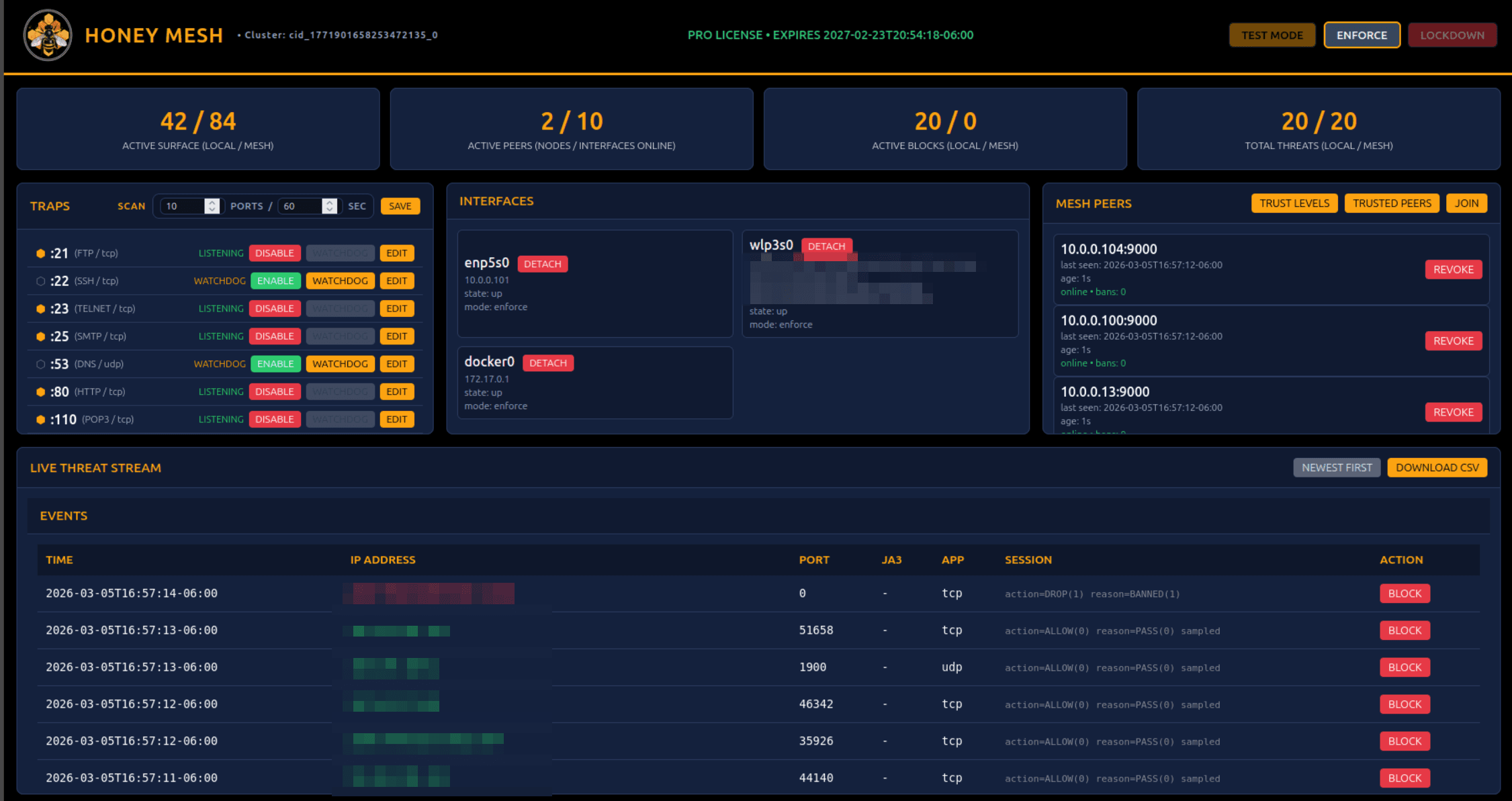

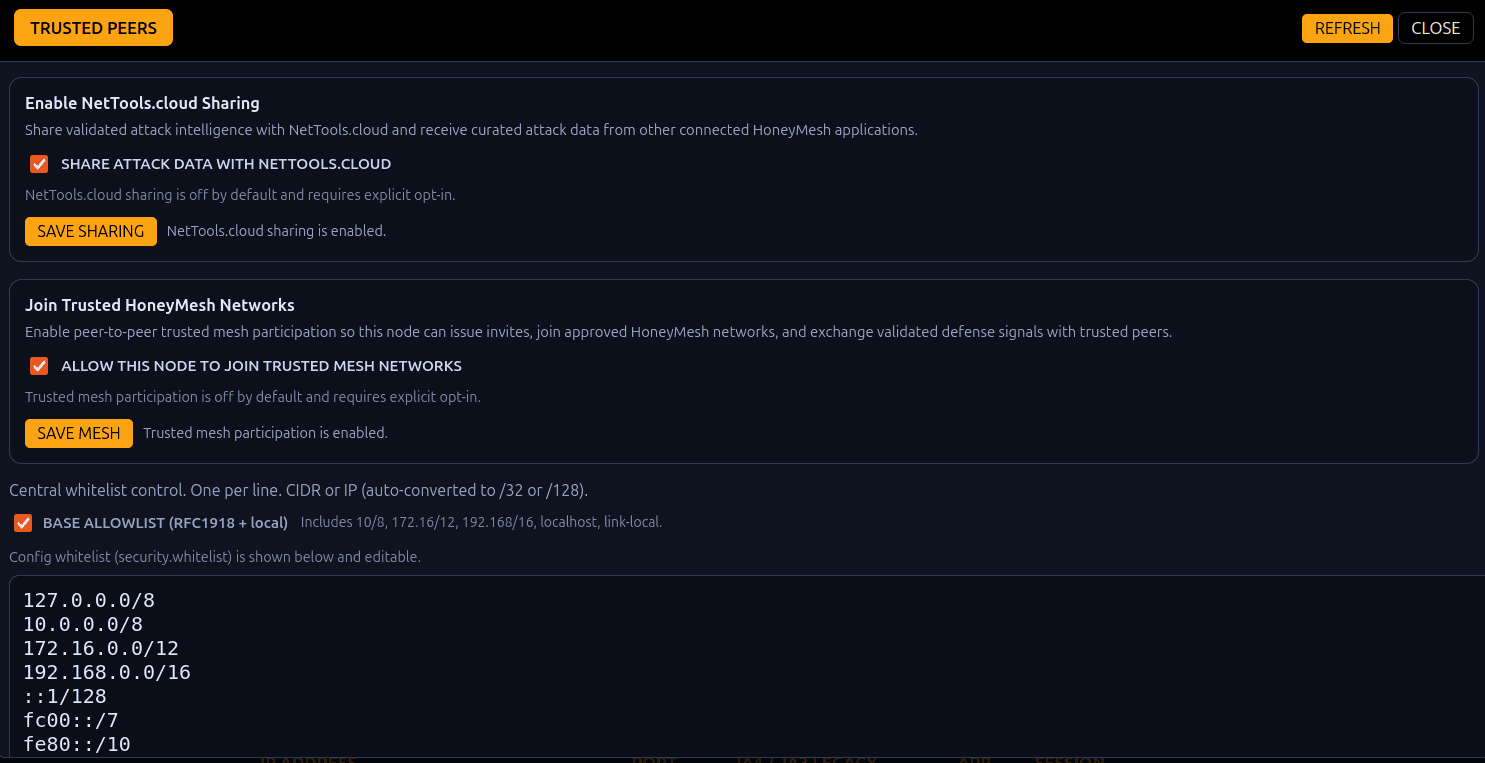
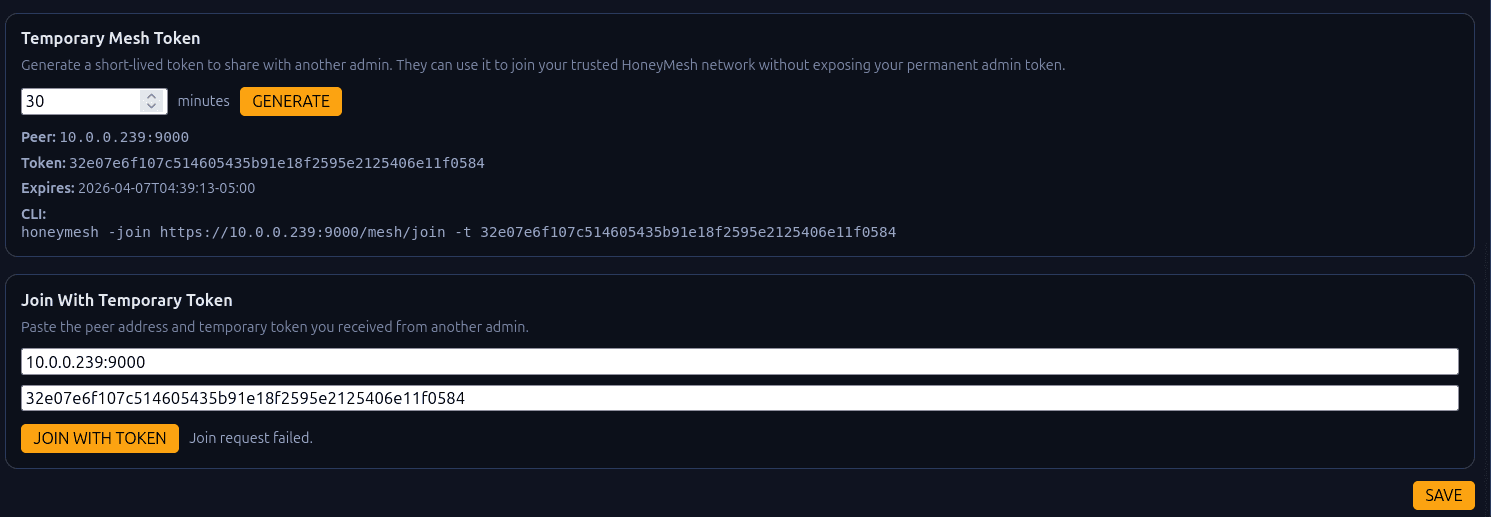
The Exchange is built for Pro subscribers who want a cleaner coordination model than pure peer-to-peer sharing. It gives admins an in-app way to discover networks, review cluster IDs, connect nodes, and monitor sync health without making the website the place where those workflows live.
Exchange participation is controlled, explicit, and optional. Operators decide whether to enable discovery, whether to receive outside intelligence, and how much to trust any outside network before it influences local action.
Node Guard Free alpha setup
Install the license-free Node.js SDK, verify source attribution, and start in OBSERVE.
Client Quickstart
Verify, install, observe, and run a controlled AMD64 host pilot with recovery steps.
HoneyMesh Node Pilot Guide
Design-partner steps for the Node.js Guard and current agent-bridge limits.
Company Pilot Guide
Observe-first evaluation plan covering automatic identification and operator response.
Security and Procurement Overview
Architecture boundaries, security review questions, and planned purchase path.
HoneyMesh Operator Manual
Historical rc2 controls; use the version-matched guide inside your current signed host archive for installation.
Trusted Threat Intelligence Exchange Manual
Exchange onboarding, in-app trust controls, node linking, and admin workflows.
Architecture Overview
High-level platform design and product boundaries.
Downloads
Historical package records, setup guides, checksums, and current release-hold status.